The problem
Food tracking is one of the most effective ways to improve your health, but older tracking apps make every meal a chore of searching, converting portions, and entering macros by hand.
The bet
If logging a meal is as easy as describing it in a sentence, while still showing sources, confidence, and editable portions, tracking becomes manageable enough to actually do, without asking anyone to trust a black box.
What I built
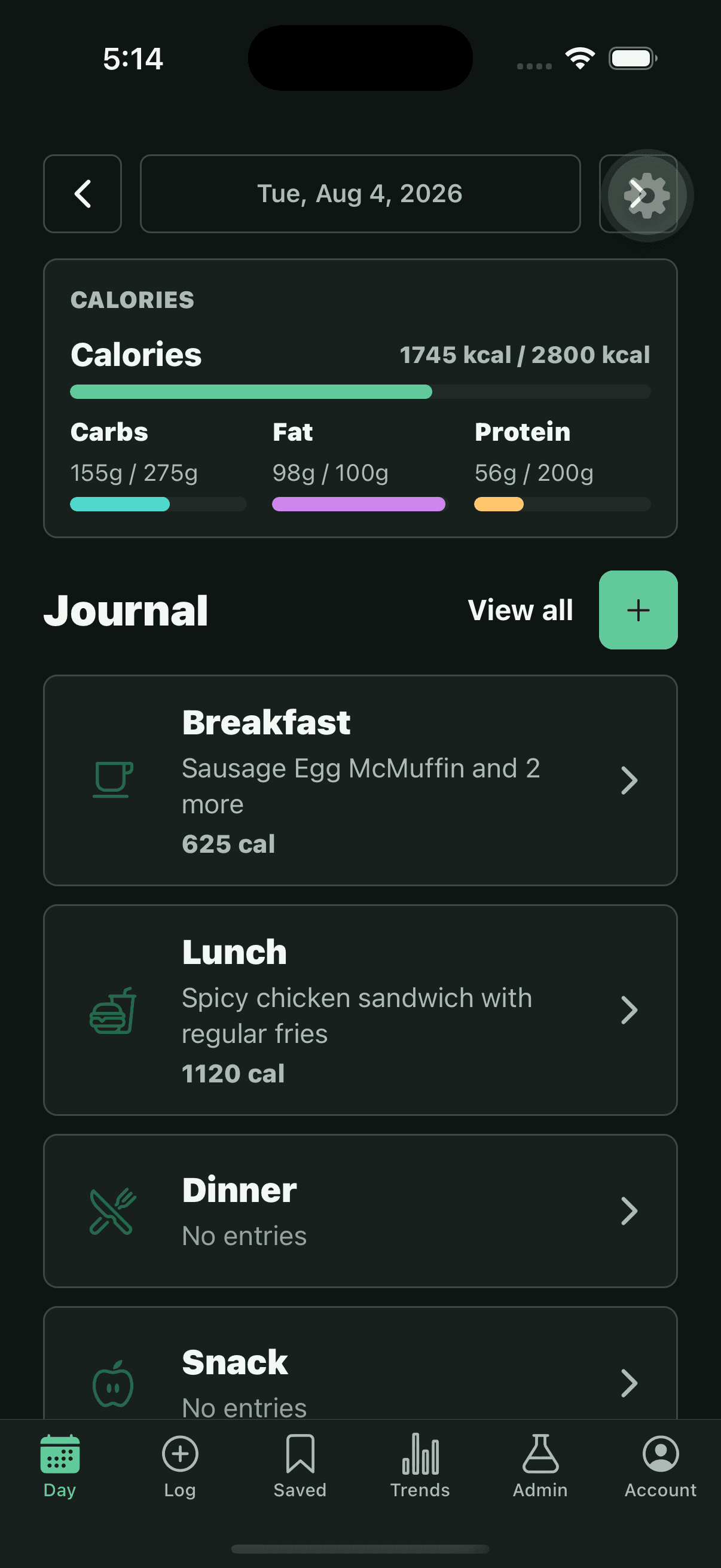
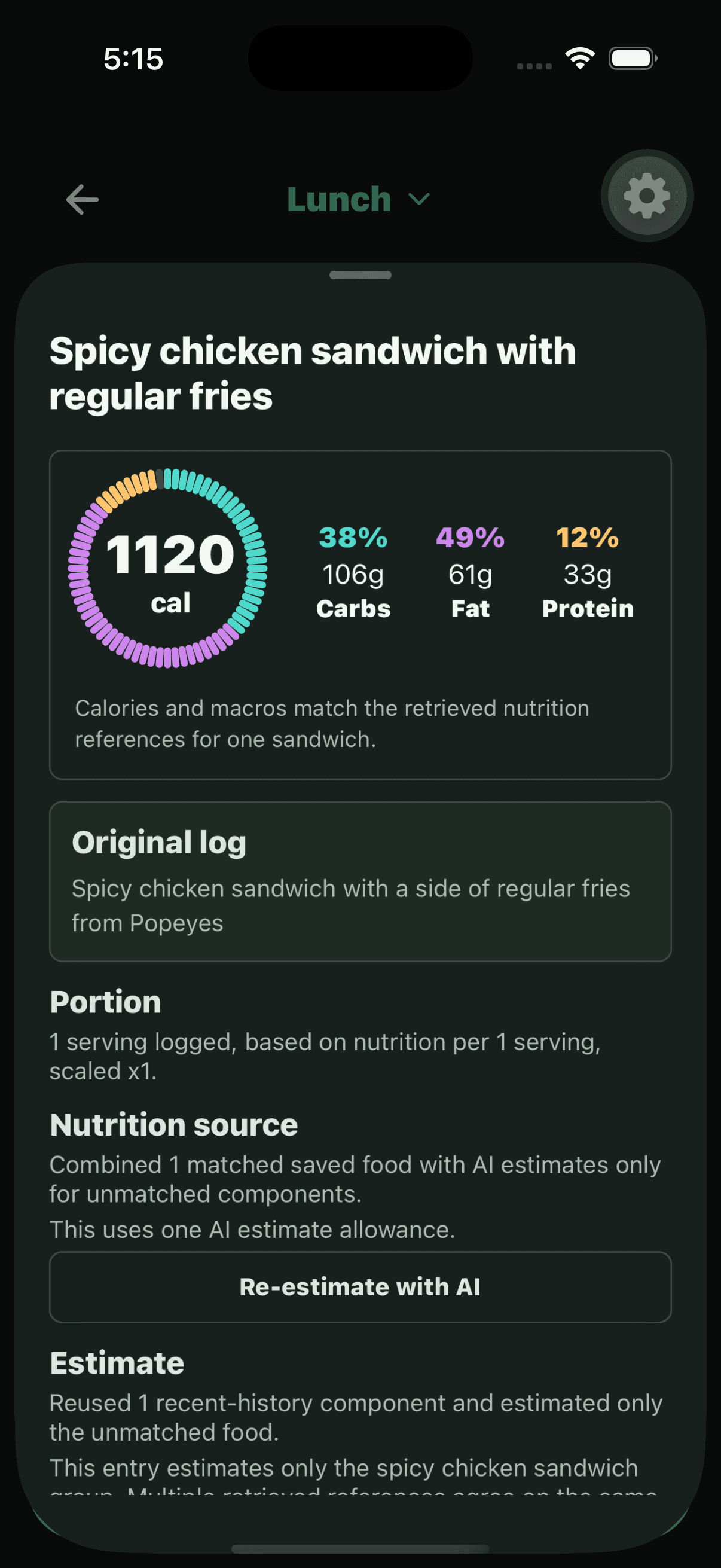
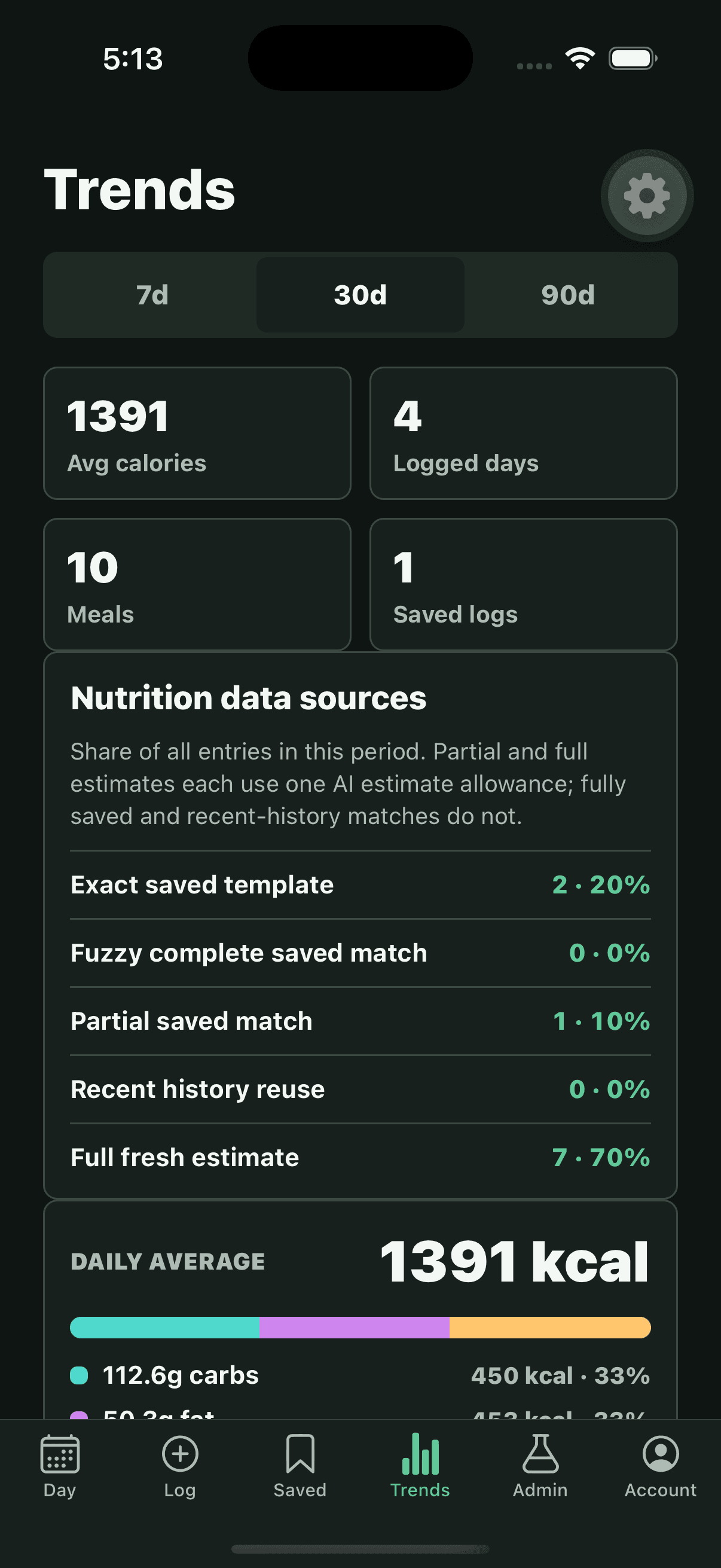
The product supports structured entries, saved foods, natural-language logging, sources, portion scaling, edits, nutrition targets, and trends.
My role
I designed the nutrition model, logging workflows, evidence and confidence requirements, estimator architecture, evaluation harness, and shared contract across conventional and conversational interfaces.
What I learned
Most of us think we know what we eat, but it's hard to really know until you write it down. I track in short stretches, and a week or two is usually enough to recalibrate my diet. The older apps made even that feel like a chore. Describing a meal in a sentence and getting an estimate back is what makes those stretches manageable.
Where it stands
- I use it for calorie and macro tracking in one- to two-week stretches
- Estimates keep retrieval, evidence, confidence, and user edits separate
- An evaluation harness measures estimate quality as a product requirement