The problem
Generic task managers did not match the way I schedule, share, revisit, and estimate the work moving through my life.
The bet
If a planning system mirrors how work actually moves across projects, family, and personal goals, it can earn daily use without adding another layer of administrative overhead.
What I built
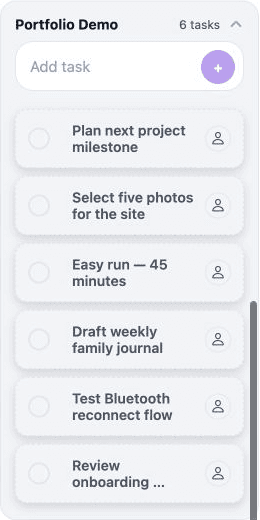
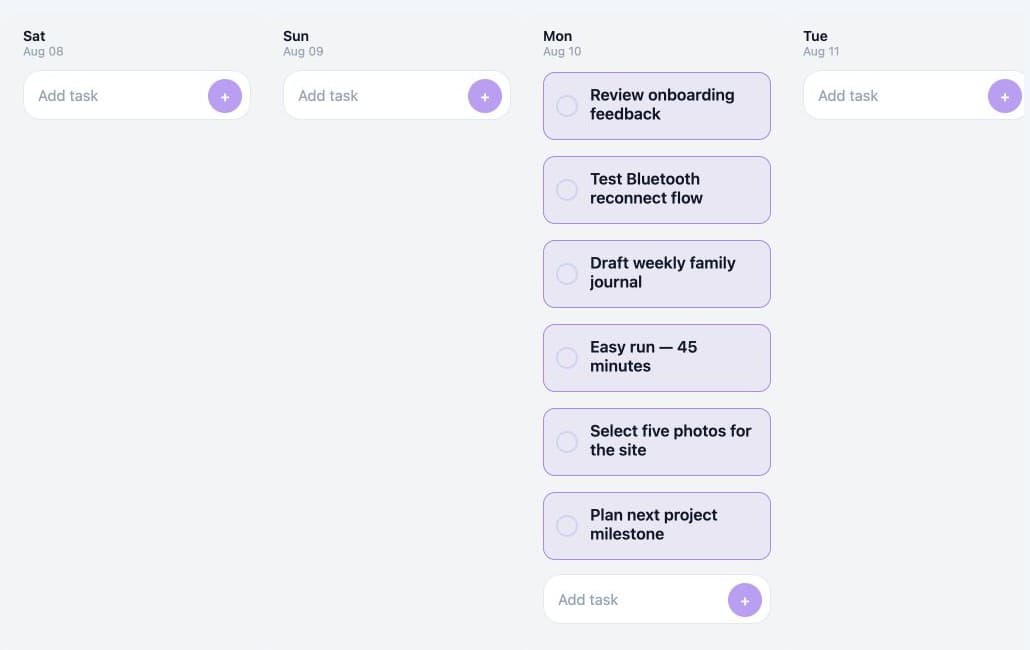
Lists, assignments, recurrence, subtasks, priorities, time estimates, scheduled windows, task history, and notifications live in one dependable system.
My role
I translated my workflow into the product model, built and maintained the cross-platform experience, and migrated live data from the previous backend without losing history or sharing relationships.
What I learned
Without a system, it's hard to tell whether I'm working on the right things. Building my own meant shaping it around how I actually capture ideas and set priorities, instead of bending to someone else's workflow. That fit is why it earned a place in my day.
Where it stands
- In daily personal use
- Live on the web, with one codebase for web, iOS, and Android
- Migrated seven lists and 92 tasks into Convex without losing history or sharing